Loading blog...
Best Invoice Reconciliation Software Solutions for 2026

Vamshi Vadali
|
June 11, 2026
|
5 minutes read

| “Most invoice reconciliation failures are not about invoice volume. They are about matching logic that cannot adapt to real-world document variation.” |
Finance and accounts payable teams spend more time chasing invoice exceptions than reviewing strategic spend. According to Ardent Partners’ AP Metrics That Matter 2025, 75% of AP departments worldwide now use some form of AI in their operations, yet most still hit reconciliation breakdowns when invoice formats vary, reference numbers differ slightly, or ERP records are out of sync.
The problem is rarely a shortage of automation tools. Best-in-class AP teams now process invoices in just 3.1 days compared to 17.4 days for standard departments, per the same Ardent Partners report. Choosing the right invoice reconciliation software closes that gap by applying accurate data extraction, intelligent matching, exception routing, and ERP integration to every invoice that enters the AP pipeline.
| Quick Answer: The best invoice reconciliation software solutions help AP and finance teams automatically match invoices with purchase orders, receipts, contracts, payments, and ERP records. In 2026, the strongest tools use AI and machine learning to detect duplicates, handle exceptions, identify matching patterns, and reduce manual reconciliation work. |
TL;DR
- Invoice reconciliation software automates invoice matching and exception review.
- AI improves fuzzy matching, duplicate detection, and exception prioritization in AP.
- Three-way matching is the critical control layer for PO-based invoice workflows.
- Exception handling quality matters more than raw automation speed for high-volume teams.
- Platform fit depends on invoice volume, ERP setup, and vendor complexity.
- Look for AI that learns from historical AP decisions, not just rule-based matching.
- Audit trail completeness and ERP write-back capability are non-negotiable evaluation criteria.
What Is Invoice Reconciliation Software?

Invoice reconciliation software helps finance and accounts payable teams compare vendor invoices against purchase orders, goods receipts, contracts, payment records, and ERP data before payment is approved.
The goal is to confirm that the invoice is accurate, approved, non-duplicate, and ready for posting. Without automation, AP teams often rely on spreadsheets, manual checks, and repeated back-and-forth with procurement or vendors. Teams evaluating invoice validation software for the first time often find that validation and reconciliation address different stages of the same AP cycle.
Modern invoice reconciliation tools go beyond simple invoice capture. They help teams validate invoice values, detect mismatches, route exceptions, and maintain audit trails.
For example: if a supplier sends an invoice for 500 units, the software compares it with the original purchase order and goods receipt note. If the PO shows 500 units ordered but the GRN confirms only 480 units received, the system flags the invoice as an exception before payment.5
Document AI that Eliminates Manual Processing and Compliance Gaps
How Does Invoice Reconciliation Work?
Invoice reconciliation verifies that a supplier invoice matches the purchase order, goods receipt, contract, or payment record before payment is approved. The goal is to confirm that the business only pays for the correct goods or services.
- Collect Documents: Gather the supplier invoice, PO, GRN, delivery receipt, contract, or payment record.
- Match Invoice Details: Compare vendor name, invoice number, quantities, unit prices, tax values, totals, and payment terms.
- Flag Discrepancies: Identify issues such as duplicate invoices, quantity mismatches, incorrect pricing, missing POs, or tax errors.
- Resolve Exceptions: AP teams review flagged invoices with procurement, warehouse teams, or vendors before approval. Teams with a structured purchase order reconciliation process in place can resolve most discrepancies before they reach the payment queue.
- Approve and Post Payment: Once verified, the invoice is approved and posted into the ERP or accounting system.
If an invoice bills for 500 units but the goods receipt confirms only 480 units were received, the system flags the mismatch before payment. This prevents overpayment and keeps AP records accurate.
| ⚙️ Most AP tools flag the mismatch but don’t help you resolve it or write the outcome back to your ERP. See how KlearStack routes invoice exceptions with full ERP integration, starting from your first invoice batch. |
Types of Invoice Reconciliation
Different businesses use different reconciliation methods depending on their procurement and payment processes.
1. Two-Way Matching
Compares the invoice with the purchase order (PO) to verify pricing, quantities, and approved items.
2. Three-Way Matching
Compares the invoice, purchase order, and goods receipt note (GRN) to verify that goods were ordered, received, and billed correctly. Understanding three-way matching in accounts payable is important for AP teams moving from basic PO verification to full procurement control.
3. Four-Way Matching
Adds an inspection or quality check report to the three-way matching process, commonly used in regulated industries.
Why AI and Machine Learning Matter in Invoice Reconciliation
AI and machine learning are becoming essential because traditional reconciliation logic often struggles with real-world invoice data. Many systems built around invoice matching automation still depend on exact-match logic. If one system shows PO-10042 and another shows 10042, a basic tool may flag it as an exception even though the transaction is clearly the same.
AI-powered reconciliation improves this by learning from historical patterns and applying smarter matching logic.
| “In God we trust; all others must bring data.”W. Edwards Deming, Quality Management Pioneer Source: The Deming Institute |
Key AI/ML capabilities include:
- Fuzzy Matching: Matches records even when reference numbers, vendor names, or formats vary slightly.
- Duplicate Detection: Identifies repeated invoices based on vendor, amount, date, invoice number, and historical patterns.
- Exception Prioritization: Separates low-risk mismatches from high-risk discrepancies.
- Anomaly Detection: Flags unusual payment behavior, suspicious invoice changes, or unexpected vendor activity.
- Learning From Past Decisions: Applies previously approved matching rules to future reconciliation cycles. AP teams deploying AP automation with machine learning see the greatest benefit when invoice volume is high and vendor diversity is wide.
AP teams do not only need faster matching. They need fewer false exceptions and better decision support.
| 📊 Best-in-class AP teams maintain an invoice exception rate of 9%, versus 22% for standard AP departments: Closing this gap is what separates high-performing AP operations from those stuck in manual review cycles.Source: Ardent Partners AP Metrics That Matter 2025 |
| 📊 Most invoice reconciliation tools apply static rules to dynamic invoice data. The platforms that perform best in high-volume AP environments are those that learn from the exceptions AP teams actually approve. See how KlearStack’s AI-powered matching improves accuracy with every invoice cycle. |
Document AI that Eliminates Manual Processing and Compliance Gaps
Top 15 Invoice Reconciliation Software Solutions for 2026
Here are the 15 best invoice reconciliation software solutions available today. Each offers unique features to help businesses improve their financial processes.
1. Beanworks

Beanworks offers specialized invoice reconciliation with strong approval workflow capabilities. The platform automates invoice coding, matching, and approval routing across the organization.
The system provides real-time visibility into reconciliation status, letting teams identify exception items without navigating multiple queues. Integration with QuickBooks, Sage, and other common platforms makes implementation straightforward for mid-market finance teams.
2. Bill.com

Bill.com combines invoice reconciliation with payment execution in a single platform. The system uses AI to extract invoice data automatically, reducing manual entry before the matching step.
Approval workflows incorporate reconciliation checks, ensuring three-way matching occurs before payments are initiated. The platform suits small to medium businesses managing both payables and vendor relationships within one system.
3. BlackLine

BlackLine offers specialized reconciliation tools as part of its financial close platform. The system handles invoice-to-payment matching and maintains detailed audit trails for all reconciliation activity.
Exception-handling capabilities route unresolved items to the correct reviewer with full context. BlackLine is the strongest option on this list for large enterprises where financial controls and audit compliance are primary requirements.
4. Concur
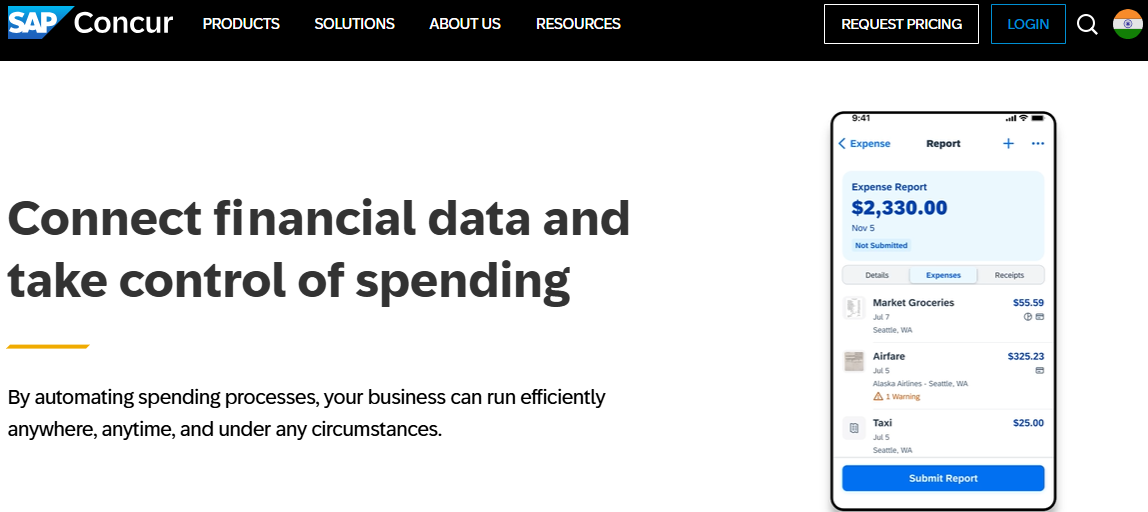
Concur integrates invoice reconciliation within its broader expense and AP management platform. The software matches invoices against purchase orders and approval records with support for complex hierarchical approval structures.
Mobile capabilities allow approvers to act on exceptions from any location. Concur suits organizations that need unified expense and AP reconciliation within a single platform.
5. FloQast
FloQast is built for the month-end close process, with invoice reconciliation as a core module. The platform provides task checklists, status tracking, and exception visibility to help AP teams stay organized during peak closing periods.
ERP integration with NetSuite, Oracle, SAP, and others ensures data flows cleanly into the reconciliation workflow. FloQast is particularly strong for accounting teams that need reconciliation tied directly to close management.
6. KlearStack
KlearStack provides AI-powered invoice reconciliation with template-free data extraction. The platform processes any invoice format without pre-built templates and matches documents against purchase orders and receipts with up to 99% accuracy. (KlearStack)
The self-learning algorithms improve with each document processed, reducing exception rates over time without manual rule updates. Most implementations deliver measurable results within the first week of deployment.
KlearStack integrates with SAP, QuickBooks, Oracle, and all major ERPs via RESTful APIs. Deployment takes 3 weeks from contract to live operation.
Why KlearStack Over Every Other Tool on This List
KlearStack solves the core problem that rule-based reconciliation tools cannot: format variance. When suppliers change invoice layouts, template-dependent systems generate exceptions. KlearStack’s self-learning AI adapts without any human intervention.
Key capabilities:
- Template-free processing for any supplier invoice format
- Self-learning AI that improves accuracy without manual rule updates
- ISO 27001 and SOC 2 compliant suitable for BFSI, manufacturing, and logistics
Verified performance outcomes:
- Up to 99% invoice data extraction accuracy
- 85% reduction in invoice processing costs
- 500% increase in operational throughput without adding headcount
Your AP team stops maintaining reconciliation software and starts processing invoices. See this running on your own document formats.

7. QuickBooks

QuickBooks includes invoice reconciliation as part of its broader accounting platform, matching invoices against bank transactions and purchase orders within a single interface.
The platform suits small to medium businesses that need AP reconciliation without a standalone solution. Recent AI updates have improved automatic match suggestions, reducing manual confirmation steps in routine cases.
8. SAP
SAP delivers invoice reconciliation within its ERP and financial management suite, with automated three-way matching built for high-volume, multi-entity environments.
The platform handles complex organizational structures across business units and currencies. Machine learning improvements in recent versions increase match rates by learning from historical resolution patterns.
9. Sage
Sage offers invoice reconciliation across its accounting and ERP product range, with both automated and manual matching modes. The platform includes supplier statement reconciliation a second verification layer that compares vendor-provided statements against internal records.
Detailed reporting on reconciliation status helps teams identify recurring bottlenecks. Sage is a strong option for growing businesses that need reconciliation depth without enterprise-level implementation complexity.
10. Stampli

Stampli centers its reconciliation workflow on communication — all conversations about a specific invoice are centralized within the platform, attached to the invoice record itself.
The software learns from user actions over time, improving matching accuracy on company-specific document patterns. Mobile capabilities allow approvers to review and act on exceptions from any location.
11. Tipalti
Tipalti specializes in accounts payable automation with multi-entity and multi-currency reconciliation capabilities. The platform handles invoice processing, matching, and payment execution including international supplier payments within a single workflow.
Built-in compliance features help ensure reconciliation meets relevant accounting and regulatory standards. Tipalti is the strongest option on this list for organizations managing global supplier bases.
12. Upflow

Upflow focuses on the accounts receivable side of reconciliation, matching customer payments against issued invoices and providing clear visibility into payment status.
The platform includes communication tools for following up on discrepancies directly with customers. Upflow is best suited for businesses where AR reconciliation is a larger pain point than AP.
13. Xero

Xero provides invoice reconciliation as part of its cloud accounting platform, using live bank feed integration to keep matching data current. The system automatically suggests invoice-to-transaction matches and allows one-click confirmation or correction.
The intuitive interface and strong mobile capabilities make Xero the most accessible option on this list for small businesses and accountants managing multiple client accounts.
14. Zarmoney
Zarmoney offers simplified invoice reconciliation for small to medium businesses, with automated bank feeds and a straightforward matching interface that requires minimal training.
The platform prioritizes ease of use over feature depth the right fit for finance teams that need clean AP reconciliation without complex rule configuration.
15. Zoho
Zoho delivers invoice reconciliation within its financial management suite, with customizable matching rules that adapt to specific business requirements. User-defined tolerance rules and dashboard reporting allow teams to configure the platform for their exact reconciliation criteria.
GST-compliant invoicing and native e-way bill support make Zoho a strong choice for Indian SMBs and regional businesses with specific compliance requirements.
Why Should You Choose KlearStack for Invoice Reconciliation?
Invoice reconciliation requires accurate data extraction from various document types. Your current systems might struggle with different invoice formats. KlearStack makes this process simple through AI-powered document processing.
Solutions That Matter:
- Template-free processing that works with any invoice format
- Self-learning AI that improves with each document processed
- End-to-end automation reducing manual data entry
Processing Speed: Handle thousands of invoices daily without adding staff. Multi-Format Support: Process any invoice type without template training. Accuracy Guarantee: Achieve up to 99% extraction accuracy across all documents.
Your finance team needs reliable data for proper reconciliation. KlearStack extracts invoice data with high precision. The system learns from each document it processes, improving accuracy over time.
Key Processing Capabilities:
- Intelligent field extraction from varying layouts
- Automated data validation across documents
- Secure document handling meeting compliance standards
Good invoice reconciliation starts with accurate data extraction. KlearStack reduces your document processing time by 80%.
Before and After: How a Leading Manufacturer Improved Invoice Reconciliation at Scale
When invoice reconciliation fails in manufacturing, the issue is rarely only invoice volume. It is usually a broken matching layer between invoices, purchase orders, GRNs, and ERP records.
This case from Nividous shows what happens when that reconciliation layer is automated properly.
Use Case: A Leading Manufacturer’s 3-Way Match Automation Across 1,000+ Vendors
The accounting and finance team had to manually process more than 15,000 invoices received from 1,000+ vendors every month. These invoices arrived from multiple plant locations, in different formats, and contained unstructured data.
The AP team was managing invoices across decentralised manufacturing locations. As volume increased, backlog grew, vendor payments were delayed, and supplier relationships became harder to manage.
Nividous implemented a fully automated AP solution across multiple plants, integrated with the back-end ERP system for automatic three-way matching between invoice, PO, and GRN.
The outcomes were clear and measurable: invoice processing turnaround time reduced by 90%, more than 1,000 staff-hours were saved every month, and manual invoice processing errors dropped to zero.
Source: Nividous AP Automation Case Study – Leading Manufacturing Company
The invoice reconciliation checklist did not change. The controls were already known. What changed was that invoice data became accurate, traceable, and matched automatically before payment approval.
| 👉 Processing thousands of invoices across multiple vendors and plant locations is a reconciliation infrastructure problem. See how KlearStack extracts, validates, and matches multi-format invoices into ERP-ready records automatically. |
Conclusion
Invoice reconciliation software provides essential tools for modern finance departments. These systems improve financial accuracy through automated matching processes. They help businesses avoid payment errors and improve vendor relationships.
- Reduces processing costs by 60-80% compared to manual methods
- Shortens payment cycles from weeks to days
- Improves data accuracy for better financial reporting
- Frees staff from routine matching to focus on exceptions
The right solution depends on your specific business needs and existing systems. Consider integration capabilities, volume requirements, and special process needs when selecting software.
FAQ on Invoice Reconciliation Software
What is invoice reconciliation software?
Invoice reconciliation software automatically matches invoices with purchase orders and receipts. It confirms payment accuracy and finds discrepancies quickly. Most systems use rules or AI for matching.
How does invoice reconciliation software reduce AP processing costs?
IAutomation eliminates the manual matching steps that consume AP staff hours every cycle. It prevents duplicate payments, catches pricing errors before payment, and cuts exception resolution time. Best-in-class AP teams using automation achieve up to 79% lower invoice processing costs than manual teams. e payment penalties.
Can invoice reconciliation software integrate with our existing ERP?
Most enterprise platforms connect with SAP, Oracle, NetSuite, QuickBooks, and other major ERPs. Integration setup takes 2–4 weeks depending on ERP complexity. KlearStack integrates via RESTful APIs with any ERP without custom development.
What features matter most when choosing invoice reconciliation software?
Three-way matching capability, exception-handling workflows, and ERP compatibility are baseline requirements. For Indian or Middle East operations, native GST and e-way bill support is non-negotiable. For high-volume operations above 10,000 invoices per month, prioritize template-free AI extraction over rule-based matching.
Vamshi Vadali
Vadali Vamshi is a technology writer specializing in AI-powered document processing, intelligent automation, and OCR solutions. He helps businesses simplify complex document workflows through clear, insightful, and actionable content. Passionate about emerging trends in Document AI, Vadali writes extensively on how intelligent document processing accelerates efficiency and compliance across industries.